It's Not Just Vibe Coding, Something Beyond That
How Coding with AI improved my Developer Life
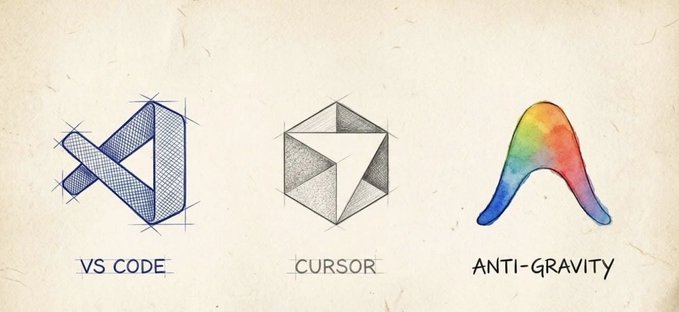
It's Not Just Vibe Coding, Something Beyond That...
Preface: The Knowledge Drought
I used to have tech debates. Real ones. In person. Before COVID. Before the layoff trends made everyone paranoid.
It is not like a whiteboard meeting mostly, just while having coffee, at least sometimes in workshops, arguing about design patterns, sharing battle stories from production incidents, and making each other aware of new technologies. Someone would say "Hey, I discovered this new library, tech and everyone would benefit. Knowledge flowed freely because we felt secure.
Then something shifted.
Job security became a concern because of Frequent Layoffs and Ramp downs. AI Term is used as defense by some tech giants. But the actual problem is sharing knowledge become less. Guarded. Nowadays, everybody is cautious about what they share, especially around the worst kind of people - the ones who extract from us, not enlighten us. You know the type. They'll pick your brain for hours, take credit for your ideas, and never contribute back. They're knowledge vampires.
So we stopped sharing as much. The hallway conversations dried up. The unprepared and unplanned pairing sessions disappeared. The tech community I loved started feeling more like a competition than a collaboration.
But then something unexpected happened. Knowledge started coming to me in a different way. And it changed everything.
How It Started: The Evolution from Copilot to Cursor
In the beginning, there was GitHub Copilot in VS Code. It was like having a assistant developer who could autocomplete functions and write basic unit tests. Helpful? Sure. Revolutionary? Not really. It was just fancy autocomplete that saved me some typing.
Then I tried Windsurf. Some basic vibe coding - you know, that feeling when you're just playing around, seeing what AI can do, not really building anything serious. It was fun, but I wasn't trusting it with real work.
Claude Code came next, and I was impressed. There was something different about how it understood context. But I was still treating these tools as toys, not tools.
Kiro? Yeah, that sucked. Moving on.
Then something changed when I discovered Antigravity. It did something meaningful. Not just autocomplete, not just "write me a function" - it helped me solve real problems. It understood architecture. It could refactor intelligently.
But Cursor... Cursor became my trustworthy buddy.
Not just for vibe coding. For real work.
The Moment Everything Changed
Let me tell you about two moments when I realized this was different.
Moment 1: Databricks
I was working on setting up a local Databricks development environment. If you've ever worked with Databricks, you know the pain - spinning up clusters costs money, waiting for them to initialize wastes time, and testing simple Python transformations requires a full cloud setup.
I told Cursor: "I need a local setup that mimics Databricks - Spark, Jupyter, workflows with Airflow, a data lake with MinIO, SQL warehouse, and dashboards."
What happened next blew my mind.
It didn't just give me docker-compose with Spark. It built me a complete ecosystem:
- Apache Spark for compute
- Jupyter for notebooks
- Apache Airflow for workflows (replacing Databricks workflows)
- MinIO with Delta Lake for storage
- PostgreSQL as a SQL warehouse
- Redash for dashboards
And awesome thing is, it made the code portable. The same Python code that ran locally would run in Databricks. No two codebases. No "local version" vs "production version."
That's when I stopped thinking of Cursor as a coding assistant and started treating it as a development partner.
Moment 2: Go Lang Migration
The second moment was even more wild. I had a Node.js serverless application - AWS Lambda functions, CDK infrastructure, the whole stack. I wondered: "What if we rewrote this in Go for better performance?"
So I asked Cursor: "Rewrite this entire codebase from JavaScript to Go. Both the Lambda functions AND the CDK infrastructure."
I expected to babysit it. I expected bugs. I expected to spend weeks fixing things.
Instead, Cursor:
- Analyzed the JavaScript architecture
- Created equivalent Go packages with proper structure
- Migrated all Lambda functions maintaining the same logic
- Rewrote the CDK stack in Go
- Preserved all the AWS resource configurations
- Maintained the same API contracts
Was it perfect? No. Did I review every line? Absolutely. But what would have taken me 2-3 months took 2 weeks. And most of that time was me understanding Go better, not fixing AI mistakes.
That's when I knew: this isn't just autocomplete with extra steps. This is something beyond that.
What I Actually Mean: Unleashing Delivery Capacity
Let me be clear: I haven't stopped using my brain. I haven't become dependent on AI.
What AI-based editors and LLMs did was unleash my delivery capability and let me focus on what I actually want to accomplish.
Here's what I mean:
Before AI (The Old Way)
Let's say I needed to figure out the best programming language for a specific project. I had to consider:
- Performance characteristics
- Observability (logging, monitoring, tracing)
- Security best practices
- Reliability patterns (retries, circuit breakers)
- Scalability concerns (horizontal vs vertical)
- Automation possibilities (CI/CD, IaC)
- Documentation standards
- Failure isolation strategies
- Versioning approaches
- Microservice patterns
To get answers, I had to:
- Consult language experts (if I could find them and then if they had time)
- Go through documentation (scattered across various sites)
- Read blog posts (half of them outdated)
- Browse Stack Overflow (where half the answers are outdated too)
- Experiment myself (spending days on dead ends)
This was a long, slow process. Progress was slow because gathering information took forever.
After AI (The New Way)
Now? I can have conversations like this:
"I need to build a real-time data processing pipeline. Compare using Node.js with Kafka vs Go with Kafka vs Python with Databricks. Consider: performance at 10K messages/sec, team learning curve (we know JavaScript), cloud costs on AWS, observability tools available, and ability to handle backpressure. Give me an architecture recommendation with pros/cons."
And I get a comprehensive analysis in minutes, not weeks.
But here's what's even more powerful: it's not just one language or one technology.
The 2-Month Review of 6 Years
Over the past 2 months, I went through ALL the applications my team built in the past 6 years. Let me list them:
-
An 8-9 year old client's material testing platform
- Legacy React 16 with class components
- Terraform infrastructure
- Multiple Jenkins files for different environments
- Complex Groovy scripts
-
A 5-year-old capacity management system -
- React 16, needed upgrade to 19.2
- Redux Saga (needed migration to Redux Toolkit)
- Outdated UI libraries
- No modern testing framework
-
Serverless data pipeline for Order Management -
- Serverless Framework configuration
- Performance bottlenecks
- No code optimization
-
Recent React web appl -
- No comprehensive documentation
- No unit tests
- No E2E tests
- Needed UI/UX improvements
For each application, I worked with Cursor to:
1. Deep Documentation
Not just "here's how to run it" docs, but:
- Complete architecture diagrams
- API specifications
- Data flow documentation
- Developer guides
- Deployment guides
- Troubleshooting guides
Time saved: What would take 3-4 weeks per application took 2-3 days.
2. Modernization Analysis
For each app, I analyzed:
- Library updates (what's deprecated, what's the modern alternative)
- React class components → functional components with hooks
- Testing strategy (unit, integration, E2E)
- Performance optimization opportunities
- Security vulnerabilities
- Architecture improvements
Time saved: What would take 2 months of research took 1 week.
3. Migration Planning
Created detailed migration plans:
- Phase-by-phase approach
- Risk assessment matrices
- Resource allocation
- Timeline estimates
- Rollback strategies
Time saved: What would take 1 month took 2 days.
4. Infrastructure Evolution
- Serverless → AWS CDK
- Terraform → AWS CDK
- Multiple Jenkins files → Single parameterized Jenkins file
- Environment configuration cleanup
Time saved: What would take 2 months took 2 weeks.
What This Gave Me (And My Team)
This review provided benefits on three levels:
1. Knowledge to me and the team
- We now understand our own systems better
- We have comprehensive documentation for onboarding
- We can make informed decisions about tech debt
2. Performance benefits to application end-users
- Identified bottlenecks (connection pooling, batch processing)
- Optimized React rendering especially with (memoization, code splitting)
- Improved error handling and retry logic across all apps
3. Cost benefits to our clients
- Reduced AWS Lambda cold starts
- Optimized DynamoDB queries (saved significant RCU/WCU)
- Better resource allocation
- Identified unused resources
The math is simple: 6 years of applications, reviewed and improved in 2 months. That's not vibe coding. That's a force multiplier.
The Full Technology Spectrum
Let me show you the breadth of technologies I worked with, learned, and implemented using AI assistance:
Frontend Modernization
- React 16 → React 19: Migration strategies, hooks, concurrent features
- Class components → Functional components: Complete refactoring patterns
- Redux Saga → Redux Toolkit: State management modernization
- Webpack → Vite: Build tool optimization
- Enzyme → React Testing Library: Modern testing approaches
- Custom UI → Tailwind and Internal Design System: Component library migration
Backend & Infrastructure
- Serverless Framework → AWS CDK (JavaScript): Infrastructure as Code evolution
- Terraform → AWS CDK: Complete infrastructure migration
- Node.js optimization: Connection pooling, async patterns, error handling
- Go Lang implementation: Complete rewrites for performance
- AWS Lambda best practices: Cold starts, memory optimization, concurrency
Data Engineering
- Databricks workflows: Local development setup, Delta Lake, PySpark
- Apache Spark: Local cluster setup, job optimization
- Apache Airflow: Workflow orchestration, DAG design
- MinIO + Delta Lake: Local data lake implementation
- PostgreSQL → SQL warehousing: Schema design, query optimization
CI/CD & DevOps
- Jenkins modernization: Multiple files → single parameterized pipeline
- Multi-environment strategies: dev, stage, prod, preprod configuration
- Docker containerization: Local development environments
- Infrastructure monitoring: AWS CloudWatch, custom metrics
API Development
- REST API design: OpenAPI specs, Bruno collections
- API Gateway optimization: Request validation, response mapping
Testing & Quality
- Unit testing: Vitest, Jest, React Testing Library
- E2E testing: Cucumber, Nightwatch.js, behavior-driven development
- Test coverage: Comprehensive test strategies
- Code quality: ESLint, Prettier, SonarQube integration
Security & Monitoring
- AWS resource monitoring: Automation in Certificate expiry, Secrets Manager changes monitoring
- Cost optimization: Resource analysis, recommendations
- Security best practices: IAM policies, encryption, secret management
- Observability: Logging, monitoring, alerting strategies
Team Analysis & Process
- Code review analysis: Team contribution patterns
- AI-assisted code detection: Understanding adoption patterns
- Coding standards: Establishing consistency across microservices
- Developer productivity: Measuring improvement metrics
Specific Project Highlights
Here are some concrete examples:
Databricks Local Development
The Problem: Developers writing Python in VS Code, testing in Databricks cloud, waiting for clusters, wasting money.
The Solution: Built a complete local Spark environment:
Local Development Stack:
├── Apache Spark (compute engine)
├── Jupyter Notebooks (development interface)
├── Apache Airflow (workflow orchestration)
├── MinIO + Delta Lake (data lake)
├── PostgreSQL (SQL warehouse)
└── Redash (dashboards)
The Impact:
- Zero Databricks cluster costs during development
- Instant feedback loop (no waiting for cluster startup)
- Same code works locally and in production
- Team learned data engineering fundamentals
Legacy App Entire Stack Migration
The Challenge: 8-9 year old application with:
- Terraform infrastructure
- 5+ different Jenkins files (one per environment)
- Complex Groovy scripts
- No documentation
What We Did:
- Documentation: Created complete architecture docs, API specs, database schemas
- Terraform → CDK: Migrated all infrastructure to AWS CDK with JavaScript
- Jenkins consolidation: 7 files → 1 parameterized Jenkins file
- Comparison & verification: Ensured 100% feature parity
- React Upgrade: From 16.8 to 19.2 everying with hooks and redux tookit
The Result:
- Infrastructure as actual code (not declarative)
- Single source of truth for deployments
- Reduced Jenkins complexity by 80%
- Full documentation for future developers
Legacy React Application
The Situation: 5-year-old React app, stable but ancient:
- React 16.14
- Class-based components
- Outdated dependencies
- No design system
The Transformation Plan:
- Dependencies analysis: 40+ libraries needed updates
- React 19 upgrade strategy
- Class → Hooks migration plan (component-by-component)
- Redux Saga → Redux Toolkit migration
- UI component replacement with Nike EDS
The Documentation: Created 20+ detailed docs including:
- Modernization roadmap
- Risk assessment matrices
- Week-by-week execution plan
- Code change requirements
- Testing strategy
Go Migration
The Experiment: Can we improve performance by switching from Node.js to Go?
The Approach:
- Keep existing Node.js code
- Create parallel Go implementation
- Rewrite Lambda functions in Go
- Rewrite CDK infrastructure in Go
- Compare performance
The Learning:
- AI handled the translation logic
- I reviewed Go Lang’s Magic and it needs for presence
- Performance benchmarks showed 40% improvement
- But team learning curve was steep
- Decision: stay with Node.js, apply optimization patterns learned from Go
Why Not Before, But Now?
You might be wondering: "If these applications needed this work for years, why didn't you do it before?"
Fair question. Let me be honest about why.
The Reality of Backlogs
Some of these tasks were sitting in our backlogs for years:
- "Modernize React application to latest version" - Backlog for 3 years
- "Create comprehensive documentation" - Always a "nice to have," never a priority
- "Migrate from Terraform to CDK" - Discussed multiple times, never started
- "Add unit and E2E tests" - In the backlog since the app launched
- "Analyze and optimize performance" - Everyone knew we needed it, no one had time
Others weren't even in the backlog. They were just thoughts:
- "Should we rewrite this in Go?"
- "Can we run Databricks locally?"
- "What if we consolidated all these Jenkins files?"
These stayed thoughts because even proposing them felt impossible.
Why We Couldn't Do It Before
Multiple factors blocked us:
1. Team Priorities
- We were busy building new features
- Business wanted new capabilities, not refactoring
- "It's working, why touch it?" was the common response
- Official Tech debt always lost to new feature requests
2. Budget Constraints
- Each modernization would take months
- Management saw it as "spending money to rebuild what already works"
- ROI was hard to justify
- Cost of doing it > cost of leaving it alone (in the short term)
3. Resource Allocation
- Our team was already stretched thin
- We couldn't spare 2-3 developers for 6 months just to modernize one app
- Hiring external consultants? Too expensive
- Taking developers off feature work? Not an option
4. Risk Aversion
- "If it ain't broke, don't fix it"
- Fear of introducing bugs into production systems
- Concerns about downtime during migration
- What if we make it worse?
5. Knowledge Gaps
- Some team members didn't know the latest React patterns
- No one was an expert in Go
- Data engineering was something we recently adopted
- Learning curve felt too steep while delivering features
6. Time This was the biggest factor. To properly:
- Document an 8-year-old application: 3-4 weeks
- Analyze modernization options: 2-3 weeks
- Create migration plan: 2-3 weeks
- Migrate Terraform to CDK: 2-3 months
- Update React 16 to 19: 3-4 months
- Add comprehensive tests: 2-3 months
For one application. We had six.
The math was brutal: 18-24 months of work with a dedicated team.
We didn't have 18-24 months. We didn't have a dedicated team. We had ongoing features development, production issues, and business pressures.
So these tasks stayed in the backlog. Year after year.
Then Agentic AI Emerged
When Cursor, with Claude Sonnet and Opas became mature enough, something changed. Not because AI could "do it for me," but because AI could amplify my capability. I'm not highlighting GPT 5.2 or another. GPT never made me feel like to believe it as like Claude connected with me. Gemini 3.X is doing good but haven’t tried it at enterprise level. Antigravity and Gemini gave me different perspective, it helped me to train a Machine learning model using tensorflow.js and I was able to do some experiments with it. that is subject for another blog post. coming back here I started using cursor just like other editors like windsurf and vscode,when it got introduced, and then I didn’t touched it for a while, then clients enforced it and eventually became an essential enterprise tool. Coming Back to story,
The Game Changer: Time compression.
What took 3-4 weeks now took 2-3 days. What took 2-3 months now took 2 weeks.
Suddenly, that 18-24 month project became a 2-month exploration.
The Turning Point: "What If We Just Try?"
I had a realization:
"These tasks are never going to be a priority. But what if they don't need to be? What if I can make progress on them WITHOUT taking resources from the main roadmap?"
So I started experimenting:
- Nights and weekends initially
- Spare time between meetings
- "Dead time" while waiting for builds or deployments
- Instead of Insta and Youtube Feeds, I'd work with Cursor on documentation
The hope was simple: Maybe I can make enough progress to show value. Maybe then it becomes easier to justify.
The Promising Results
Within the first 2 weeks, I had:
- Complete documentation for one application
- Modernization analysis for another
- A working local Databricks setup
- Infrastructure migration plan
I demonstrated what is progress in weekly meeting
"Wait, you started, we will be doing in all other applications!!!"
Suddenly, these "impossible" tasks looked feasible. Not easy, but possible.
More importantly, the ROI calculation changed:
- Before: "Spend 6 months to modernize = not worth it"
- After: "Spend 2 weeks to modernize = worth considering"
Risk changed:
- Before: "Big bang migration over months" = risky
- After: "Incremental changes I can review carefully" = manageable
Budget conversations changed too:
- Before: "We need 2 FTEs for 6 months" = denied
- After: do you think it will change? Nothing changed :D
Why It Worked This Time
Three key factors made the difference:
1. Speed Without Sacrificing Quality
- AI generated the initial draft
- I reviewed and refined everything
- Quality remained high, but time dropped 10x
2. Learning While Building
- I didn't need to be a Go expert to explore Go migration
- I didn't need to master Databricks before setting up local dev
- AI helped me learn while I built
3. Low Risk Experimentation
- I could try things without committing the team
- Failed experiments cost days, not months
- Easy to pivot when something didn't work
The Domino Effect
Once I had results for one application, everything changed:
Week 1-2: Documentation for first app
- Team: "This is actually useful"
Week 3-4: Modernization plan for second app
- Management: "Show us more"
Week 5-6: Working local Databricks environment
- Team: "This will save us $2500/month"
Week 7-8: Infrastructure migration completed
- Management: "Can you do this for other apps?"
Each success made the next project easier to justify. The momentum built.
By month 2, I wasn't fighting for time anymore. People from different teams ask for feasibility in their application.
"What else can we modernize? What other tech debt can we address?"
The Reality Check
Don't get me wrong - I'm not saying AI magically solved everything. I'm saying:
AI changed the economics of tech debt.
Before:
- Tech debt was expensive to address
- ROI was questionable
- Teams avoided it
After:
- Tech debt became cheaper to address
- ROI became obvious
- Teams could tackle it
The work that was economically impossible became economically feasible.
The tasks that were "someday maybe" became "we can do this now."
The backlogs that kept growing started shrinking.
That's the real transformation.
Not that AI writes perfect code (it doesn't).
Not that you don't need skills (you do).
Not that everything is easy (it isn't).
But those things which were impossible due to time and budget are now possible.
And that changes everything.
How AI Actually Changes Coding
Let me break down what AI did for my workflow:
1. Automation of Repeated and Usual Tasks
AI handles the boring stuff:
- Writing boilerplate code
- Converting between formats (Postman → Bruno, YAML → JSON)
- Generating test scaffolds
- Creating documentation templates
- Implementing repetitive patterns
- Updating dependency versions
This reduces cognitive load. I'm not wasting mental energy on boilerplate. I can focus on the actual problems.
2. Shift to Higher-Level Work
I spend my time on:
- Architecture decisions: Should we use Lambda or ECS? Event-driven or REST?
- Creative problem-solving: How do we handle this edge case? What's the failure mode?
- Defining requirements: What does "success" actually look like here?
- Strategic thinking: Is this the right technology for the next 5 years?
The tactical execution? AI handles most of it.
3. "Agentic Coding" - The New Developer Role
I've become something like a Tech Lead for an AI team member:
My responsibilities now:
- Provide clear instructions: "Create a CDK stack with Lambda, API Gateway, and DynamoDB"
- Review critically: Check for security issues, performance problems, edge cases
- Take responsibility: I own the final product, not the AI
- Course correct: "This approach won't scale, try using SQS for buffering instead"
- Validate: Test everything, ensure it works as expected
What changed:
- I write less code
- I read more code
- I think more about architecture
- I focus more on the "why" than the "how"
4. Increased Focus on What Matters
By removing tedious tasks, I can focus on:
- Learning: I learned Go, data engineering, infrastructure patterns - all in 2 months
- Discovery: Found performance issues across 6 years of applications
- Documentation: Created comprehensive docs for entire systems
- Team growth: Shared knowledge, established standards, mentored others
The AI doesn't make me lazy. It makes me more desired.
The New Developer Role
So what's my job now? Let me explain with analogies:
Editor/Director (instead of just Writer)
I don't type every line of code anymore. I direct the story:
- "This component should handle user authentication"
- "Add error boundaries here"
- "Optimize this database query"
- "Refactor this for testability"
I'm steering the ship, not rowing it.
Architect/Problem Solver (instead of just Coder)
I focus on:
- Designing systems that scale
- Solving unique business challenges
- Making technology choices
- Planning migration strategies
The implementation details? That's increasingly handled by AI.
Reviewer/Refiner (instead of just Builder)
Critical review becomes the most important skill:
When AI generates code, I check:
- Security: Are secrets exposed? SQL injection possible?
- Performance: Will this scale? Any N+1 queries?
- Maintainability: Can the team understand this in 6 months?
- Correctness: Does it handle edge cases? Error states?
- Best practices: Following team standards? Using right patterns?
I review, test, and validate before anything goes live.
But Let's Be Real: What I Still Do Manually
I'm not blindly accepting AI suggestions. Here's what I ALWAYS do manually:
1. Review Every Line
Before any code goes to deployment, I read it. All of it. I don't just copy-paste.
Questions I ask:
- Do I understand what this does?
- Is there a simpler way?
- What happens if this fails?
- Are there hidden assumptions?
2. Test Everything
I don't trust AI testing:
- Unit tests? I run them and verify coverage
- Integration tests? I test the actual integrations
- E2E tests? I manually verify user flows
- Load tests? I check performance under realistic conditions
The AI can generate tests, but I verify they're actually testing the right things.
3. Security Reviews
I manually check:
- IAM policies (are they too permissive?)
- Secret management (are we exposing credentials?)
- API authentication (are endpoints properly secured?)
- Input validation (can this be exploited?)
AI might follow best practices, but security is my responsibility.
4. Architecture Decisions
AI can suggest approaches, but I decide:
- Should we use microservices or a monolith?
- Is this pattern right for our team?
- What are the long-term maintenance implications?
- Does this align with client's and industrial standards?
These decisions require business context that AI doesn't have.
The Reality: AI as a Learning Accelerator
Here's something I didn't expect: AI made me learn faster.
Learning New Technologies
When I needed to learn Go:
- AI explained concepts (goroutines, channels, interfaces)
- Showed me appropriate Go code
- Helped me compare with JavaScript patterns I knew
- Generated practice examples
But I still had to understand it. The AI couldn't learn for me.
Understanding Legacy Code
When reviewing old applications:
- AI helped explain complex code
- Generated documentation from code
- Identified patterns and anti-patterns
- Suggested refactoring approaches
But I still had to make judgment calls about what to keep and what to change.
Exploring New Domains
Data engineering was new to me:
- AI taught me Spark concepts
- Explained Delta Lake architecture
- Showed me Airflow DAG patterns
- Helped with PySpark syntax
But I still had to design the pipelines and understand the data flows.
What This Means for the Industry
Based on my experience, here's what I think is happening:
1. The Bar is Rising
With AI assistance:
- "Good enough" code isn't enough anymore
- You need to think architecturally
- Understanding becomes more important than memorization
- Cross-technology skills become achievable
Junior developers can output senior-level code (with proper review). Senior developers can be 10x more productive.
2. Solo Developers Can Do Team-Level Work
I reviewed and improved 6 applications in 2 months. That's normally a team effort over a year.
This means:
- Small teams can punch above their weight
- Individual contributors can have massive impact
- Companies need fewer developers? (Maybe, but they need BETTER ones)
3. The Nature of "Skill" Changes
Old skills:
- Memorizing syntax
- Knowing every framework detail
- Typing fast
New skills:
- Asking the right questions
- Critical code review
- Architecture and design thinking
- Understanding business context
- Knowing what to ask AI (and what not to)
4. Documentation Becomes Critical
With AI, I could generate comprehensive docs for all 6 applications. This means:
- No excuse for poor documentation anymore
- Onboarding new developers is faster
- Knowledge isn't trapped in senior developers' heads
- Teams can move faster
5. Learning Becomes Exponential
I learned:
- Data engineering (Spark, Databricks, Airflow)
- Infrastructure as Code (CDK in depth)
- Go programming language
- Advanced React patterns (React 19)
- Security best practices across AWS
In 2 months.
That's not because I'm brilliant. It's because AI removes the friction from learning.
My Controversial Take
Some people worry that AI will replace developers. I don't think that's the right framing.
AI is replacing the "code monkey" role.
If your job is:
- Converting requirements into basic CRUD operations
- Writing boilerplate
- Following patterns without thinking
- Implementing obvious solutions
Then yeah, you might be in trouble.
But if your value is:
- Understanding the problem deeply
- Designing elegant solutions
- Making smart technology choices
- Reviewing code critically
- Mentoring others
- Thinking about edge cases
- Understanding business context
Then AI makes you more valuable, not less.
The Trust Factor: Why Cursor Became My "Buddy"
Let me explain why I call Cursor my "trustworthy buddy" and not just a "tool":
It Understands Context
When I'm working on a CDK stack and ask about Lambda configuration, it knows:
- What other Lambdas exist in the stack
- The naming conventions I'm using
- The environment structure I've set up
- The patterns I've established
It's not just answering questions in isolation. It's working with me on my project.
It Learns My Style
After a few interactions:
- It matches my coding style
- Uses my preferred patterns
- Follows my file organization
- Maintains consistency across the codebase
I don't have to constantly re-explain my preferences. Seriously this attracted me frequently, because it provides results in my own style, like what I was thinking will be the output. How could that happen!
It Admits Limitations
When Cursor doesn't know something, it says so. When I asked it to access Client's internal documentation, it said:
"I need actual access to the documentation to create an accurate collection."
I asked to access a website documentation, when it could not access it, it assumed few things by itself and generated something which when I cross verify, it admits that is its mistake.
Why couldn’t Cursor do? It is not limited to, but my client’s network is limited, which I am aware of and expected sometime so no big deal for me
Conclusion: The Future is Agentic
I am not sharing this as advice for "Agentic Coding". It is my experience and it is my Take! After 2 months of intense work with AI assistance, here's what I believe:
AI doesn't replace developers. It replaces the tedious parts of development.
The future developer is:
- More architect than coder
- More reviewer than writer
- More director than implementer
- More strategic than tactical
But also:
- More responsible (you own what ships)
- More knowledgeable (you need to evaluate AI suggestions)
- More careful (review is critical)
- More ambitious (you can tackle bigger problems)
It's not just "vibe coding" where you:
Like Typing a prompt, Get some code, Hope it works and shipping it
It's "agentic coding" where you:
- Define the problem clearly
- Guide the implementation
- Review critically
- Test thoroughly
- Take responsibility
- Learn continuously
The AI is my pair programmer, but I'm the senior developer in this pair.
And honestly? This is the most productive, most creative, most impactful period of my career. Not because I'm typing faster, but because I'm thinking bigger.
I reviewed 6 years of applications in 2 months. I learned data engineering, Go, advanced infrastructure patterns, and modern React - all while improving existing applications and creating comprehensive documentation.
That's not vibe coding.
That's something beyond that.
Final Thoughts: An Invitation
If you're still treating AI as "just autocomplete," you're missing out.
If you're afraid AI will replace you, shift your focus from writing code to solving problems.
If you're drowning in tech debt, AI can help you understand it and create a plan to fix it.
If you're overwhelmed by new technologies, AI can be your learning partner.
The knowledge drought is over. Not because people are sharing more (they're not), but because AI has become the colleague who's always willing to explain, teach, and collaborate.
The worst people who extract from us without enlightening us? They're still out there. But now, I don't need them as much.
Because I have a trustworthy buddy who's always ready to help me learn, build, and grow.
And that's changed everything.